
Understanding Drafts in Your Colorado Home

Updated: Mar 26
The Mystery of the "Cold Couch"
It’s 7:00 PM in February. You’ve got the heat set to 72°, but you’re sitting on the couch wrapped in a blanket because you can feel a cold breeze hitting the back of your neck. You check the window—it’s closed. You check the door—it’s locked. So where is the cold coming from?
In Colorado, our homes are subjected to high winds (especially in Castle Rock and Parker) and extreme temperature differentials. When it is 10°F outside and 70°F inside, that air is desperate to equalize. It will find any pinhole to get in. At Rocky Ridge Exteriors, we hunt drafts for a living. Before you spend thousands replacing windows you might not need, let’s figure out exactly what is going on.
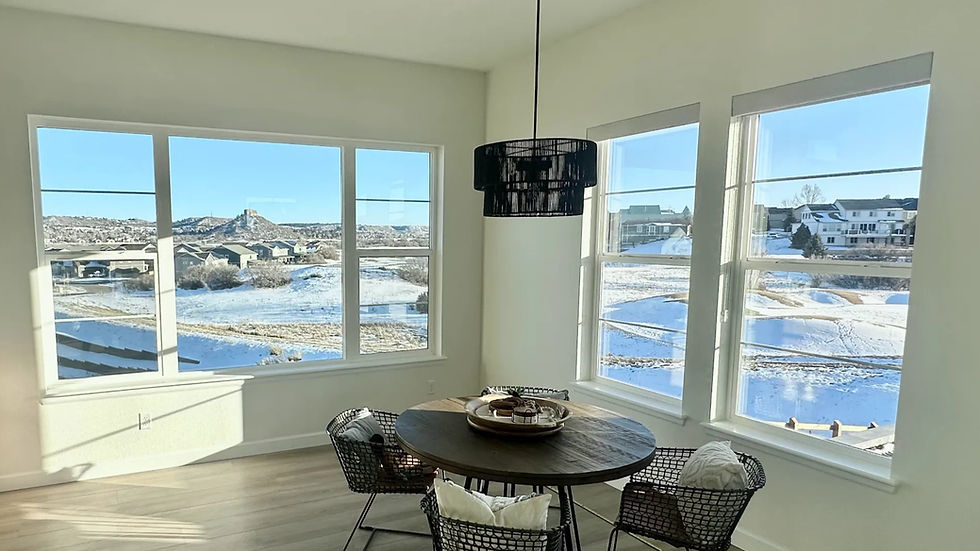
Suspect 1: The Windows (Radiant Loss vs. Air Leaks)
There are two ways a window makes you cold, and knowing the difference saves you money.
1. Air Leakage (The Draft): This is actual cold air physically moving into your house.
The Cause: The caulking around the window frame has cracked (very common in dry Colorado air) or the "sashes" (the moving parts) no longer fit tightly because the house settled.
The Test: Light a candle or incense stick. Hold it near the edge of the window frame on a windy day. If the smoke blows sideways, you have a leak.
2. Radiant Heat Loss (The "Cold Shoulder"): There is no hole, but the glass is freezing cold. When you sit near it, the window literally sucks the body heat out of you.
The Cause: Your windows have a poor "U-Factor." In Colorado, you want a U-Factor of 0.27 or lower. If you have old aluminum sliders or single-pane glass, they are acting like ice blocks in your wall.
The Fix: Replacement is the only real cure for radiant loss. We install double-pane glass with Argon gas, which acts as an invisible thermal blanket.
Suspect 2: The Doors (The "Daylight" Test)
Your front door takes a beating. The sun cooks the weatherstripping, and the constant opening and closing wears down the "sweep" (the rubber seal at the bottom).
The Colorado Problem: Wood doors look beautiful, but in our climate, they warp. A warped door creates gaps at the top or bottom corners that you might not see... until you look closely.
The "Dollar Bill" Test: Open your door, place a dollar bill across the weatherstripping, and close the door.
If you can pull the dollar out easily without resistance? Your seal is failed.
If the dollar is stuck tight? Your seal is good.
The Fix: Sometimes you just need new weatherstripping (a cheap fix!). But if the door itself is warped, it’s time to upgrade to Fiberglass. Fiberglass doesn’t shrink, swell, or warp in Colorado weather.

Suspect 3: The "Invisible" Leaks (Outlets and Rim Joists)
Sometimes, you blame the window, but the window is innocent.
Electrical Outlets: Put your hand over the outlet on an exterior wall. Feel that breeze? The wind is blowing through your siding and coming right through the electrical box.
The Rim Joist: Go to your basement. Look at where the wood frame sits on top of the concrete foundation. If that seam isn't sealed with spray foam, cold air is rushing in and rising up through your walls (the "Stack Effect"), making your main floor freezing.
The Solution: It’s Not Just What You Buy, It’s How It’s Installed
You can buy the most expensive, triple-pane, krypton-gas window on earth. But if the installer just shoves it in the hole and covers the gap with trim? It will still be drafty.
At Rocky Ridge Exteriors, we don't just "swap" windows.
We remove the old unit down to the studs.
We use low-expansion spray foam around the entire perimeter (not just fiberglass insulation, which air passes right through).
We tape and flash the exterior to waterproof it against melting snow.
We stop the air, not just the view. Tired of the chill? We offer free energy assessments. We’ll come out, check your seals, and tell you if you need a repair or a replacement.
People Also Ask (FAQ)
Q: Should I tape plastic over my windows in winter?
A: It’s ugly, but yes—it works as a temporary fix. The plastic creates a dead air space that acts as an insulator. However, if you have to do this every year, you are losing more money in heating bills than the cost of financing new energy-efficient windows.
Q: What is the best window rating for Colorado?
A: Look for the NFRC Label. In our climate zone, you want a U-Factor of 0.30 or lower (insulation) and a SHGC (Solar Heat Gain Coefficient) of 0.30-0.35. This balance keeps heat in during winter but blocks the scorching sun in July.
Q: Can I just replace the glass or do I need a whole new window?
A: If the frame is rotting or warped, you need a full replacement. If the frame is solid but the glass is foggy (broken seal), you might be able to just replace the "glass pack," but often the cost is close enough to a full new window that it’s better to upgrade the whole technology. A quick consultation with our Rocky Ridge experts will help you find the best solutions for your home.

Comments